Yoga, a practice celebrated for its physical and mental benefits, has also attracted its fair share of myths and misconceptions. These misconceptions often deter individuals from stepping onto the mat or lead them to have unrealistic expectations about what yoga can truly offer. In this article, we’ll debunk the top five myths of yoga practice, shedding light on the truths that lie beneath.
Table of Contents
Myth 1: Yoga is Only for the Flexible:
Myth 2: Yoga is Just About Physical Poses:
Myth 3: Yoga is a Religion:
Myth 4: You Need Expensive Gear and Clothing
Myth 5: You Must Be Silent and Serene During Yoga:
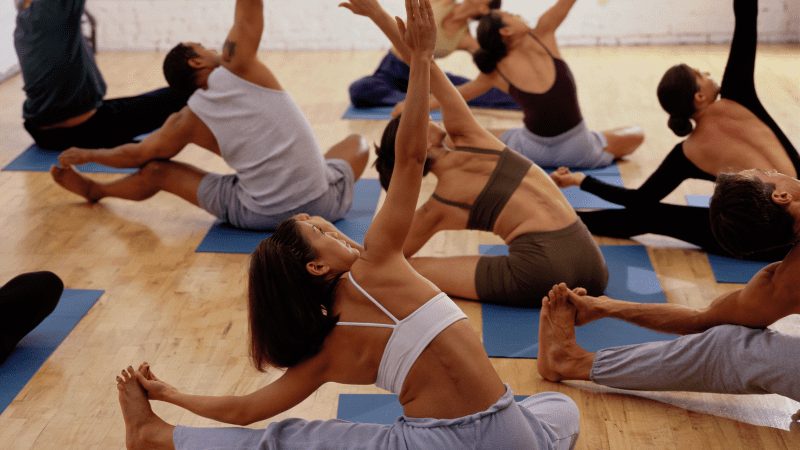
Myth 1: Yoga is Only for the Flexible:
One of the most common misconceptions is that you need to be as flexible as a pretzel to practice yoga. In reality, yoga is for everyone, regardless of your current flexibility level. It’s about improving your flexibility, not showcasing it. Yoga postures can be adapted to suit your body’s unique needs, making it accessible to all.
Myth 2: Yoga is Just About Physical Poses:
While the physical postures (asanas) are a prominent part of yoga, they’re just the tip of the iceberg. Yoga encompasses a holistic approach that includes breath control (pranayama), meditation (dhyana), ethical principles (yamas and niyamas), and more. It’s a journey that nurtures your body, mind, and spirit, not just a physical workout.
Myth 3: Yoga is a Religion:
Yoga is often mistaken for a religion, but it’s not. It’s a spiritual practice that can complement any religious or spiritual belief system. Yoga provides a framework for self-discovery and inner peace but doesn’t require you to abandon your personal faith.

Myth 4: You Need Expensive Gear and Clothing:
You don’t need designer yoga wear or fancy equipment to practice yoga. Comfortable clothing that allows free movement and a yoga mat are sufficient. The essence of yoga lies in your commitment to the practice, not the price tag of your attire or accessories.
Myth 5: You Must Be Silent and Serene During Yoga:
While yoga encourages inner peace and mindfulness, it doesn’t require you to be silent throughout your practice. It’s normal to experience physical challenges and emotional releases during yoga. Don’t be afraid to express yourself, whether it’s through laughter, tears, or even the occasional grunt.
By dispelling these common myths, we hope you feel more informed and empowered to embrace yoga as a practice that is truly for everyone. Yoga welcomes you as you are, and its benefits extend beyond the physical. It’s a journey of self-discovery, a path to balance, and a way to find tranquility amidst life’s chaos.
Remember, the essence of yoga lies in its inclusivity, adaptability, and the profound connection between your body, mind, and spirit.